
Is air a homogeneous or heterogeneous combination? This elementary query delves into the intricate composition of the air we breathe, revealing a captivating interaction of gases and their distribution. Understanding the reply is not nearly chemistry; it unlocks insights into the very ambiance that surrounds us and shapes our world.
The ambiance, a fancy mix of gases, performs an important position in sustaining life on Earth. Nitrogen, oxygen, argon, and hint quantities of different gases mix to create the air we breathe. Figuring out if this combination is homogeneous or heterogeneous hinges on whether or not its elements are uniformly distributed at a microscopic stage.
Defining Homogeneous and Heterogeneous Mixtures
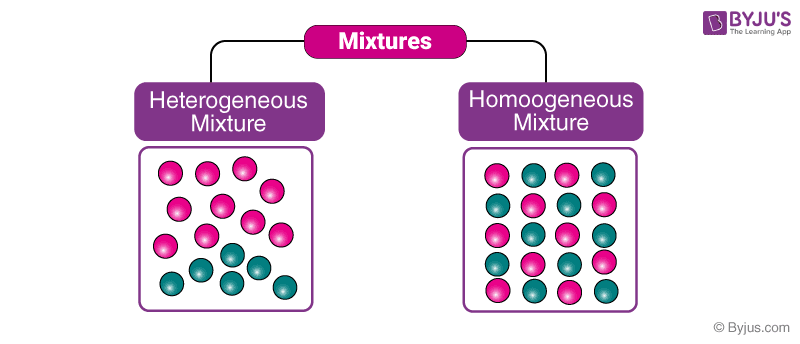
Understanding the distinction between homogeneous and heterogeneous mixtures is prime to comprehending the properties and habits of matter. These classifications are essential in numerous scientific and sensible functions, from meals processing to materials science. Figuring out the traits that outline every sort permits for a deeper understanding of the substances we encounter every day.Homogeneous and heterogeneous mixtures differ basically of their composition and look.
A radical understanding of those distinctions is important for correct evaluation and prediction. This part delves into the important thing traits that distinguish these two varieties of mixtures, offering examples and a comparative desk to help comprehension.
Defining Homogeneous Mixtures, Is air a homogeneous or heterogeneous
Homogeneous mixtures exhibit a uniform composition all through. This implies the elements are evenly distributed at a molecular stage, making the combination seem visually uniform. The person elements can’t be distinguished with the bare eye or fundamental remark.
Defining Heterogeneous Mixtures
Heterogeneous mixtures, in distinction, show a non-uniform composition. Their elements usually are not evenly distributed, and the completely different elements of the combination are simply distinguishable. This lack of uniformity is clear within the combination’s look.
Examples of Homogeneous and Heterogeneous Mixtures
Quite a lot of substances exemplify every sort. Saltwater is a homogeneous combination, the place salt dissolves utterly in water, leading to a uniform resolution. Air, a combination of gases, additionally represents a homogeneous combination. In distinction, a combination of sand and water is a heterogeneous combination; the sand particles stay suspended within the water and are clearly seen.
Equally, a salad is a heterogeneous combination of assorted components.
Traits of Homogeneous and Heterogeneous Mixtures
| Characteristic | Homogeneous | Heterogeneous |
|---|---|---|
| Composition | Uniform | Non-uniform |
| Look | Uniform | Non-uniform |
| Particle Measurement | Uniform (or dispersed to the molecular stage) | Non-uniform |
The desk above summarizes the important thing variations between homogeneous and heterogeneous mixtures. The uniformity of composition, look, and particle dimension is vital in distinguishing them.
Particle Distribution in Mixtures
The distribution of particles considerably impacts the traits of the combination. In homogeneous mixtures, particles are dispersed on the molecular stage, making a constant composition all through. In heterogeneous mixtures, particles usually are not evenly distributed, typically remaining separate entities or phases throughout the combination. This distinction in particle distribution is an important consider figuring out whether or not a combination is homogeneous or heterogeneous.
Air as a Combination
Air, the life-sustaining envelope surrounding our planet, is a fancy combination of gases. Understanding its composition is essential for comprehending its position in climate patterns, local weather change, and even human well being. This intricate mix of components dictates the very air we breathe. Comprehending the make-up of air supplies insights into its properties and behaviors.The ambiance, a dynamic system, consists primarily of nitrogen and oxygen, with smaller portions of different gases.
This numerous mixture creates the air we depend on. The relative proportions of those gases considerably affect the ambiance’s traits and interactions with the Earth’s floor. These proportions aren’t static; they fluctuate based mostly on numerous elements.
Composition of Air
The composition of air isn’t uniform; it varies with altitude and different elements. Understanding the important thing elements and their relative abundances is important. Air is primarily composed of nitrogen and oxygen.
- Nitrogen (N 2): Roughly 78% of the ambiance is nitrogen. Its inert nature makes it an important part for sustaining the soundness of the ambiance.
- Oxygen (O 2): Essential for respiration, oxygen contains about 21% of the ambiance. This very important fuel is important for all times as we all know it.
- Argon (Ar): A noble fuel, argon accounts for roughly 0.93% of the ambiance. Its presence contributes to the general composition and properties of the air.
- Hint Gases: Different gases, together with carbon dioxide (CO 2), neon (Ne), helium (He), methane (CH 4), and krypton (Kr), exist in a lot smaller portions however play vital roles in numerous atmospheric processes.
Distribution of Gases in Air
The distribution of gases within the ambiance is not uniform. The density of gases decreases with altitude. Essentially the most dense elements, like nitrogen and oxygen, are concentrated nearer to the Earth’s floor. 
Diagram exhibiting the lowering density of gases as altitude will increase. The very best focus of gases is discovered close to the Earth’s floor, and the density step by step thins out as you progress larger into the ambiance.
Formation of Air
The formation of air is a fancy course of tied to the Earth’s formation and evolution. The early ambiance was drastically completely different from the one we all know at present. Volcanic outgassing, asteroid impacts, and organic exercise have all contributed to the present composition of air.
Air Stress and Parts
Air strain is a drive exerted by the burden of the air above. The strain at sea stage is considerably larger than at larger altitudes as a result of larger mass of air urgent down. The completely different densities of the atmospheric gases contribute to the general strain gradient.
Strategies of Separating Air Parts
Varied strategies will be employed to separate the elements of air. These strategies typically depend on the completely different boiling factors and different bodily properties of the gases. The commonest technique is fractional distillation.
- Fractional Distillation: This course of entails cooling the air to extraordinarily low temperatures. The liquefied air is then allowed to heat step by step. Totally different elements boil off at various temperatures, permitting them to be collected individually. This course of takes benefit of the variations in boiling factors of gases in air.
Stream Chart of Air Separation
A move chart detailing the method of separating air elements utilizing fractional distillation.
- Compression: Air is compressed to extend its density.
- Cooling: Compressed air is cooled to liquefy it.
- Fractional Distillation: The liquefied air is slowly heated. Totally different gases vaporize at completely different temperatures, permitting for his or her assortment.
- Assortment: Collected gases are saved based mostly on their boiling factors.
Properties of Air Parts
The properties of air’s elements affect its habits and influence on the setting. Understanding these properties is vital for predicting and managing atmospheric phenomena.
- Nitrogen: Inert and unreactive, nitrogen supplies a secure ambiance.
- Oxygen: Important for respiration, oxygen helps combustion and is important for all times.
- Argon: A noble fuel, argon is unreactive and utilized in numerous functions.
- Hint Gases: These gases play important roles in atmospheric processes, just like the greenhouse impact.
Air’s Homogeneity/Heterogeneity: Is Air A Homogeneous Or Heterogeneous
Air, a seemingly easy substance, is definitely a fancy combination of gases. Understanding its composition and the way it behaves below completely different circumstances is essential for numerous functions, from climate forecasting to aerospace engineering. This examination delves into the nuances of air’s homogeneity, exploring the elements that affect its obvious consistency and the explanation why it is categorized as a homogeneous combination regardless of its numerous elements.A elementary side of understanding air is its composition.
Air is predominantly nitrogen and oxygen, with hint quantities of different gases like argon, carbon dioxide, and water vapor. The distribution of those elements performs a pivotal position in figuring out air’s properties. This intricate combine provides rise to the query of whether or not air is really a homogeneous or heterogeneous combination.
Evaluating Air’s Composition to Different Mixtures
A key to understanding air’s homogeneity is evaluating it to each homogeneous and heterogeneous mixtures. Homogeneous mixtures, like saltwater, have a uniform composition all through. In distinction, heterogeneous mixtures, like a salad, exhibit distinct elements that aren’t uniformly distributed. Air, regardless of containing numerous gases, shows a uniform distribution of its elements at a given location and time.
This uniformity is a defining attribute that differentiates it from a heterogeneous combination.
Traits Indicating Air’s Classification
Air’s constant composition at a given location is a defining attribute. The continual mixing of gases within the ambiance ensures a uniform distribution of elements. This fixed mixing course of, pushed by wind and different atmospheric phenomena, maintains a constant composition over giant spatial scales.
Why Air is Thought of Homogeneous
Regardless of the varied gases inside air, the minute focus of particular person elements permits for a constant general composition. That is essential for the uniformity that makes air a homogeneous combination. The vastness of the ambiance and the fixed mixing mechanisms make sure the constant proportion of gases. Air’s uniform composition, at any given level, is a testomony to the blending course of.
Components Affecting Air’s Homogeneity
A number of elements can have an effect on the homogeneity of air, significantly on smaller scales. Native climate patterns, comparable to localized temperature variations or air pollution occasions, can result in short-term variations in composition. Nevertheless, these localized fluctuations don’t alter air’s general homogeneity on a bigger scale.
The Mixing Course of and Air’s Composition
The fixed mixing of gases within the ambiance is the important thing to air’s homogeneous nature. Wind, turbulence, and different atmospheric phenomena drive this mixing, guaranteeing a uniform distribution of elements. This dynamic course of is important for sustaining the secure composition that defines air as a homogeneous combination.
Arguments for and In opposition to Classifying Air as Homogeneous
| Argument | Clarification |
|---|---|
| For | The continual mixing of gases ensures a uniform distribution of elements. |
| For | Air’s composition stays comparatively fixed over giant spatial scales. |
| In opposition to | Localized air pollution occasions or temperature inversions can create short-term variations in composition. |
| In opposition to | The presence of various gases in air could seem to contradict homogeneity. |
Components Influencing Obvious Homogeneity
The obvious homogeneity of air is considerably influenced by the size of remark. On a world scale, air’s composition stays comparatively fixed, whereas on an area scale, short-term variations can happen on account of localized circumstances. These variations, whereas noticeable, don’t negate the general homogeneity of air.
Air’s Conduct Beneath Varied Situations
| Situation | Description |
|---|---|
| Excessive Altitude | Air density decreases, and the focus of some gases, like oxygen, might differ barely on account of diminished strain. |
| Low Altitude | Air density will increase, and the composition is comparatively uniform as a result of continued mixing. |
Epilogue

In conclusion, whereas air seems uniform and constant, its molecular make-up, and the interactions between its elements, are key to understanding its homogeneity. The constant proportions of gases in air, regardless of the complexity of its formation and interactions, make it a major instance of a homogeneous combination. Understanding these elements is important for appreciating the soundness and significance of our ambiance.
Key Questions Answered
What are the primary elements of air?
Air is primarily composed of nitrogen (roughly 78%), oxygen (roughly 21%), and argon (roughly 1%). Hint quantities of different gases, comparable to carbon dioxide, neon, and helium, are additionally current.
How does air strain relate to the composition of air?
Air strain is a results of the burden of the air molecules urgent down on a floor. At sea stage, air strain is larger as a result of larger weight of the overlying air column. The composition of air, nonetheless, stays comparatively fixed all through completely different altitudes, regardless of the adjustments in strain.
Can the elements of air be separated?
Sure, the elements of air will be separated utilizing numerous strategies, comparable to fractional distillation. This course of exploits the variations in boiling factors of the gases to isolate them.
How does air behave at completely different altitudes?
Air strain and density lower with growing altitude. The composition of air, nonetheless, stays comparatively fixed, regardless of the adjustments in density and strain. At larger altitudes, there is perhaps a slight variation within the focus of sure gases on account of atmospheric dynamics, however general homogeneity is maintained.
