
Dont tread on me tattoo – Do not tread on me tattoo: A strong image with a wealthy historical past, this design has transcended generations, evolving from a colonial-era rallying cry to a potent assertion of non-public conviction within the trendy world. Its imagery, deeply rooted in American id, has change into part of the cultural cloth, gracing every thing from flags to clothes to the very pores and skin of its wearers.
This exploration delves into the historic context of the “Do not Tread on Me” motto, tracing its evolution from its revolutionary origins to its modern interpretations. We’ll study the symbolism behind this enduring design, analyzing the way it’s manifested in numerous types of media and its important affect on American tradition. Past the surface-level that means, we’ll additionally unravel the various meanings individuals affiliate with the tattoo at this time, and the potential controversies surrounding its use in trendy society.
Historic Context
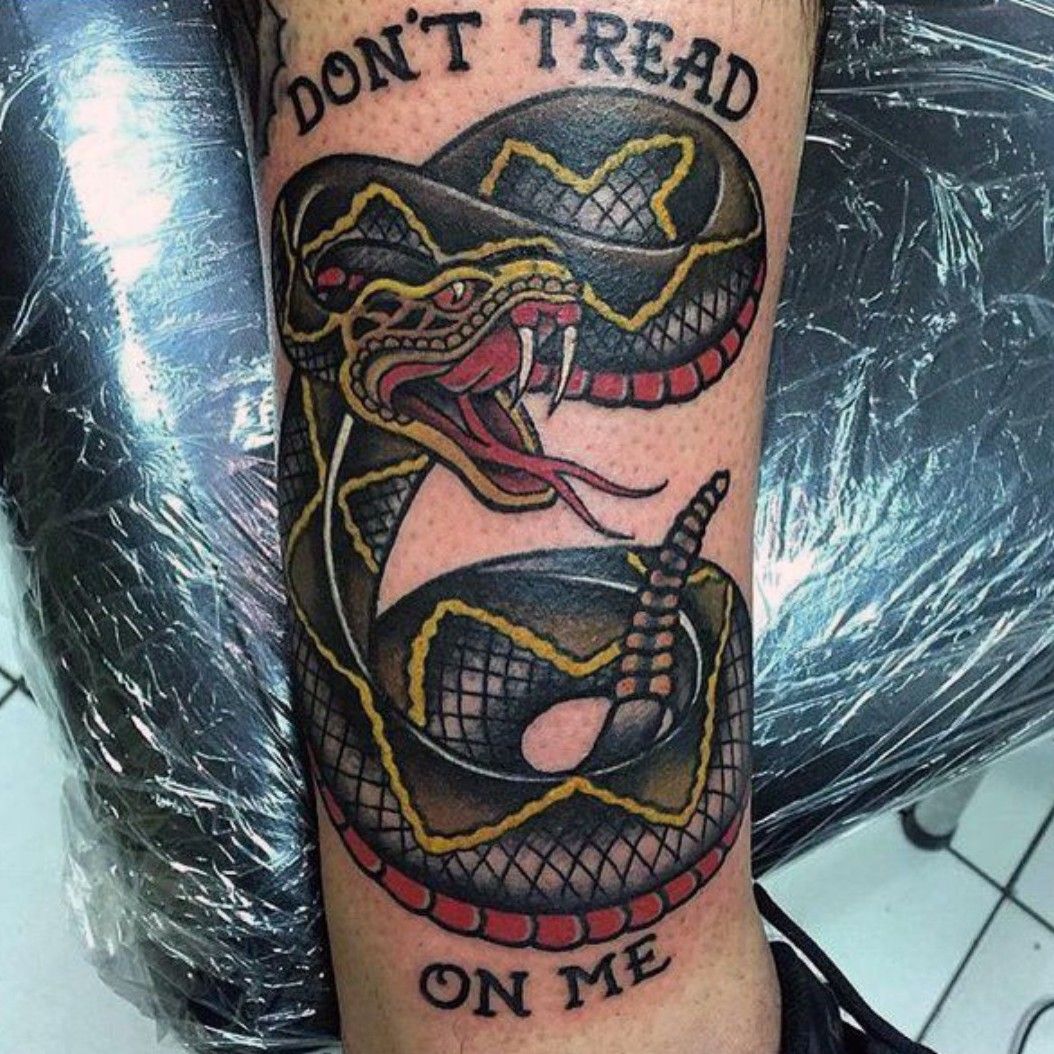
The “Do not Tread on Me” motto, deeply ingrained in American tradition, possesses a wealthy historical past intertwined with the nation’s founding and evolution. Greater than a easy slogan, it represents evolving concepts about liberty, self-governance, and the boundaries of authority. Its enduring attraction lies in its potential to resonate with totally different generations and contexts, adapting to altering political landscapes. Understanding this historical past gives essential perception into the enduring relevance of this highly effective phrase.The motto’s roots are firmly planted within the colonial period, reflecting the colonists’ rising discontent with British rule.
It captured the anxieties and aspirations of a individuals looking for autonomy and freedom from perceived oppression. The imagery and symbolism related to “Do not Tread on Me” have developed considerably over time, shaping its affect on fashionable tradition and political discourse.
Origins and Early Utilization
The “Do not Tread on Me” motto, usually related to the Gadsden flag, emerged within the 1770s in the course of the American Revolutionary Warfare. This era noticed escalating tensions between the American colonies and Nice Britain, culminating within the Declaration of Independence. The phrase’s symbolic energy was immediately recognizable and efficient in rallying help for the colonial trigger. Early iterations of the flag, that includes a coiled rattlesnake, had been easy but impactful visible representations of colonial resistance.
Evolution of Imagery and Symbolism
The coiled rattlesnake, a logo of protection and warning, grew to become the long-lasting imagery related to the motto. Its presence on the flag, referred to as the Gadsden flag, visually communicated the colonists’ dedication to defend their liberties. The simplicity of the design was a key consider its widespread adoption. Variations of the Gadsden flag emerged, usually incorporating different parts just like the date of the American Revolution or different patriotic themes.
These variations demonstrated the flag’s adaptability and evolving significance.
Chronological Desk of the Motto’s Utilization
| Date | Occasion | Description |
|---|---|---|
| 1775 | Early American Revolution | The “Do not Tread on Me” motto and Gadsden flag emerge as a potent image of colonial resistance to British rule. |
| 1776 | Declaration of Independence | The motto’s significance grows because it turns into related to the pursuit of independence and self-governance. |
| 1800s | Rise of American Nationalism | The “Do not Tread on Me” motto and Gadsden flag are adopted by numerous teams to specific American beliefs and nationalism. |
| Fifties-Sixties | Civil Rights Motion | The phrase is repurposed within the context of racial and civil liberties struggles, illustrating its adaptability to various social actions. |
| 2000s-Current | Trendy Political Discourse | The motto’s imagery and symbolism are regularly employed in trendy political contexts, reflecting the continued relevance of its core message. |
Examples of Utilization Throughout Time, Dont tread on me tattoo
The “Do not Tread on Me” motto has been utilized in various contexts all through American historical past. From the Revolutionary Warfare to the Civil Rights Motion, its symbolism has developed to replicate altering social and political landscapes. Its use in modern politics underscores its continued resonance and relevance. As an example, the flag has seen trendy revivals in numerous political campaigns, emphasizing the enduring need for liberty and self-determination.
Its modern utilization, nevertheless, usually generates debate on account of its potential for misinterpretation and appropriation.
Trendy Interpretations and Symbolism
The “Do not Tread on Me” motto, deeply rooted in American historical past, continues to resonate in trendy occasions. This enduring attraction stems from its multifaceted symbolism, which has developed and tailored to replicate modern considerations and values. Past its historic context, the motto finds new expression in numerous types of self-expression, together with tattoos. Understanding these trendy interpretations is essential to appreciating the continuing relevance of this highly effective phrase.The “Do not Tread on Me” motto, initially a rallying cry in opposition to perceived oppression, has transcended its historic context.
Right now, its that means is commonly reinterpreted and tailored to suit particular person beliefs and circumstances. This adaptability permits the motto to attach with various teams and people, whereas sustaining a core message of non-public liberty and freedom from coercion.
Various Interpretations of the Motto
The “Do not Tread on Me” motto is regularly adopted to signify a variety of beliefs, from political independence to private autonomy. People usually use it to specific their need to be free from exterior management or interference, whatever the particular type that management may take.
Widespread Themes and Meanings in Tattoos
A number of frequent themes and meanings emerge when analyzing “Do not Tread on Me” tattoos. A big theme facilities on particular person liberty and self-reliance. The tattoo acts as a private assertion in regards to the need to make unbiased selections and resist any type of oppression or undue affect. This interpretation resonates strongly with those that worth private freedom and self-determination.
One other regularly encountered theme is a powerful sense of patriotism and nationwide satisfaction. The motto, on this context, turns into a logo of allegiance to at least one’s nation and a dedication to its values. It can be seen as an announcement a few need for restricted authorities intervention in private lives and affairs.
Comparability with Unique Which means
Whereas the core message of freedom and resistance stays, trendy interpretations usually diverge from the unique historic context. The unique intent was centered on opposition to British rule and tyranny. Right now, the motto is commonly utilized to broader ideas of freedom, resembling freedom from authorities overreach, private freedom, or freedom of thought. This broadened interpretation displays the evolution of societal values and the evolving political panorama.
Desk of Trendy Interpretations
| Interpretation | Context | Symbolism | Instance |
|---|---|---|---|
| Particular person Liberty | Private autonomy, self-reliance | Resistance to exterior management | An individual who values their independence and freedom of alternative. |
| Patriotism and Nationwide Pleasure | Loyalty to at least one’s nation | Help for nationwide values and beliefs | A citizen who strongly identifies with their nation’s rules. |
| Restricted Authorities Intervention | Resistance to authorities overreach | Safety of non-public freedoms | A person who believes in restricted authorities involvement of their lives. |
| Anti-establishment Sentiment | Opposition to prevailing social norms or authority | Revolt in opposition to the established order | Somebody who feels alienated from societal expectations. |
Significance in Modern Political Discourse
The “Do not Tread on Me” motto continues to play a job in modern political discourse, usually related to numerous political ideologies. Its presence in on-line boards and social media discussions highlights its continued relevance within the public sphere. It may be used to specific help for insurance policies that restrict authorities intervention or emphasize private freedom, though these interpretations are sometimes topic to various interpretations.
Cultural and Social Affect: Dont Tread On Me Tattoo
The “Do not Tread on Me” motto, deeply rooted in American historical past, continues to resonate throughout numerous cultural spheres. Its symbolic energy extends far past its preliminary revolutionary context, influencing creative expressions, shaping subcultural identities, and even contributing to nationwide narratives. Understanding its modern significance requires a nuanced examination of its evolving interpretations and cultural affect. This exploration delves into how the motto transcends its unique that means, highlighting its advanced relationship with American id and the potential for controversy.The motto’s enduring attraction stems from its potent mixture of defiance and patriotism.
It speaks to a need for freedom, self-reliance, and resistance in opposition to perceived oppression, interesting to people throughout various backgrounds and communities. This broad attraction, nevertheless, additionally creates an area for various interpretations, resulting in a posh tapestry of cultural expressions and social implications.
Cultural Significance Throughout Media
The “Do not Tread on Me” motto has transcended its historic context, discovering expression in a mess of creative and media kinds. Its imagery seems in fashionable music, movie, and visible arts, usually serving as a logo of resistance, liberty, and individualism. From politically charged protest songs to creative depictions of revolutionary beliefs, the motto’s presence in modern tradition speaks volumes about its enduring relevance.
Illustration in Subcultures
The motto’s versatility extends to varied subcultures, the place it usually takes on nuanced meanings. As an example, inside sure navy and patriotic communities, the motto signifies unwavering loyalty and dedication. Amongst particular political factions, it represents a rejection of perceived governmental overreach. Within the context of explicit motorbike golf equipment or different teams, it would sign a defiance of societal norms or a need for independence.
Comparative Evaluation of Cultural Significance
| Group | Significance | Expression | Examples |
|---|---|---|---|
| Navy Personnel | Image of unwavering loyalty, dedication to rules, and readiness to defend freedoms. | Embroidered patches, tattoos, and equipment. | Navy uniform insignia, patriotic shows. |
| Political Activists | Signifies resistance in opposition to perceived governmental overreach and injustice. | Protest indicators, slogans, and social media campaigns. | Political rallies, public demonstrations. |
| Patriot Teams | Represents a perception in conventional American values, rules of particular person liberty, and a rejection of perceived societal and governmental intrusions. | Flags, clothes, and political activism. | Sporting of patriotic clothes, displaying flags, involvement in conservative political actions. |
| Bike Golf equipment | Represents a defiance of societal norms, a way of freedom, and a need for independence. | Embroidered patches, tattoos, and clothes. | Membership colours, emblems, and group rallies. |
Affect on American Id
The “Do not Tread on Me” motto has deeply influenced American id, serving as a rallying cry for many who worth liberty and independence. It embodies a core perception in restricted authorities and particular person rights, shaping the nation’s political discourse and historic narratives. Nevertheless, its appropriation and misinterpretation throughout numerous teams has led to controversy.
Potential for Controversy
The motto’s broad attraction additionally presents a possible for controversy. In modern contexts, its affiliation with particular political ideologies or teams can result in misinterpretations and misunderstandings. Its use by sure teams could be seen as divisive, probably alienating those that maintain opposing viewpoints. Cautious consideration of the historic context and the potential for misappropriation is essential to make sure accountable and considerate use of the motto within the trendy period.
Remaining Conclusion
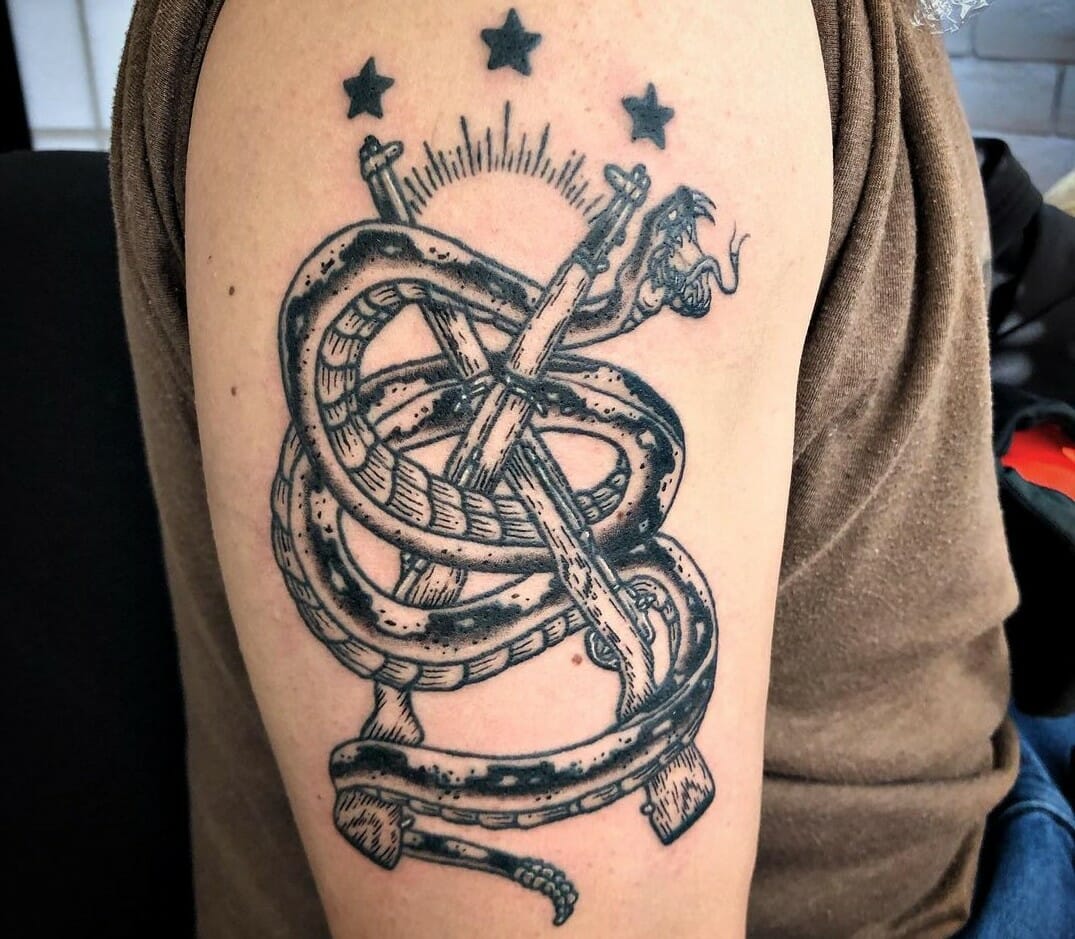
In conclusion, the “Do not Tread on Me” tattoo, with its multifaceted historical past and enduring symbolism, serves as a compelling case research in how a easy motto can resonate throughout time and tradition. From its colonial roots to its modern purposes, this design displays a posh interaction of historic context, private interpretation, and societal affect. Understanding this evolution is essential to comprehending the nuanced meanings behind the tattoo and its enduring significance for its wearers and observers alike.
FAQ Insights
What are the commonest misconceptions in regards to the “Do not Tread on Me” tattoo?
Whereas usually related to patriotism, the tattoo’s that means could be interpreted in a different way by numerous people. Some may misunderstand the image as solely a patriotic show, neglecting the potential for extra advanced and even controversial interpretations in modern contexts. It is essential to think about the wearer’s particular person intentions and the historic context behind the motto.
How has the symbolism of the “Do not Tread on Me” tattoo developed over time?
The symbolism has shifted considerably. Initially, it was a rallying cry in opposition to perceived oppression. Right now, it is usually used as an announcement of independence, private freedom, and even defiance in opposition to authority, relying on the context and the person.
Are there any particular subcultures that regularly use the “Do not Tread on Me” tattoo?
Whereas not completely tied to at least one subculture, the tattoo seems regularly in navy and patriotic communities, in addition to amongst these expressing libertarian or conservative viewpoints. Nevertheless, its utilization transcends these teams, with variations in interpretation and that means throughout totally different people.
What are some potential moral issues when contemplating getting a “Do not Tread on Me” tattoo?
Understanding the historic context and the potential for misinterpretation is essential. Fastidiously contemplating the private that means and meant message is significant earlier than completely expressing such a powerful assertion by physique artwork.
