
Great in German language opens up a treasure trove of nuanced expressions, providing an enchanting exploration of how totally different phrases and phrases seize the essence of “fantastic” in numerous contexts. This journey delves into the center of German linguistic richness, uncovering how formality, emotion, and cultural context form the way in which “fantastic” is expressed.
From conveying awe and admiration to describing breathtaking magnificence, we’ll navigate the complexities of German vocabulary and grammar. This exploration reveals the intricate tapestry of language, highlighting the nuances of expressing marvel within the German language, and finally offering a complete information to precisely conveying this sentiment.
Exploring the Nuances of “Great” in German
Understanding the subtleties of language is essential for efficient communication. Whereas “fantastic” in English conveys a powerful sense of awe and appreciation, its German equal is not a easy one-to-one translation. Completely different contexts require totally different nuances, and the extent of ritual performs a big position. This exploration delves into the assorted methods to specific the idea of “fantastic” in German, contemplating totally different intensities and ranges of ritual.
Various German Expressions for “Great”
German gives a wealthy tapestry of phrases and phrases to specific the idea of “fantastic,” starting from formal admiration to casual enthusiasm. A exact translation hinges on the particular context.
- Expressing awe and marvel: Phrases like wundervoll, erstaunlich, and bezaubernd seize the sense of amazement. Wunderschön is a standard different, usually used for issues of nice magnificence.
- Describing magnificence: Schön, herrlich, and zauberhaft are often used to explain one thing aesthetically pleasing. Prachtvoll emphasizes splendor and magnificence.
- Praising one thing: Toll, fantastisch, and großartig are extra casual choices for expressing sturdy approval. Ausgezeichnet and hervorragend are formal equivalents for “wonderful” or “excellent.”
Adjusting Depth and Formality
The depth of the expression could be modulated by the particular adjective chosen. As an example, wundervoll is a powerful, common expression of marvel, whereas herrlich suggests a extra relaxed and enthusiastic appreciation. Formality could be adjusted via phrase alternative and grammatical constructions.
- Formal settings usually favor phrases like hervorragend or ausgezeichnet, emphasizing the seriousness and significance of the topic. Casual settings enable for extra informal expressions like toll or fantastisch.
- Including adverbs like sehr (very) or extrem (extraordinarily) can intensify the which means of any expression. Conversely, softening expressions could be achieved with qualifiers like ziemlich (fairly) or etwas (considerably).
Grammatical Constructions and Sentence Sorts
German grammar permits for flexibility in incorporating these expressions into numerous sentence sorts. The location of the adjective throughout the sentence construction usually impacts the emphasis and nuance.
Whereas “fantastic” in German has nuances past a easy translation, understanding the subtleties is essential. It is a subject that, like listening to a chook tune, everybody’s heard about the bird song , resonates deeply with the cultural context. In the end, exploring “fantastic” in German requires a extra complete understanding than a fundamental dictionary entry.
- The place of the adjective earlier than the noun normally highlights the standard of the noun. For instance, ein wundervoller Abend (an exquisite night) emphasizes the night’s high quality.
- Using subordinate clauses or descriptive phrases can additional elaborate on the context of the reward. As an example, Das Konzert battle so wundervoll, dass ich es nie vergessen werde (The live performance was so fantastic that I’ll always remember it).
Comparability of Formal and Casual Utilization
| Expression | Formal Context (Instance Sentence) | Casual Context (Instance Sentence) |
|---|---|---|
| Wundervoll | Das Essen battle wundervoll zubereitet. (The meals was splendidly ready.) | Dieser Movie battle einfach wundervoll! (This film was merely fantastic!) |
| Hervorragend | Die Präsentation battle hervorragend. (The presentation was wonderful.) | Das Essen battle hervorragend! (The meals was wonderful!) |
| Schön | Das Gemälde ist eine schöne Kunst. (The portray is an attractive murals.) | Die Aussicht ist schön. (The view is gorgeous.) |
| Toll | (Much less widespread in formal contexts) | Das Konzert battle toll! (The live performance was nice!) |
Cultural Contexts and Expressions
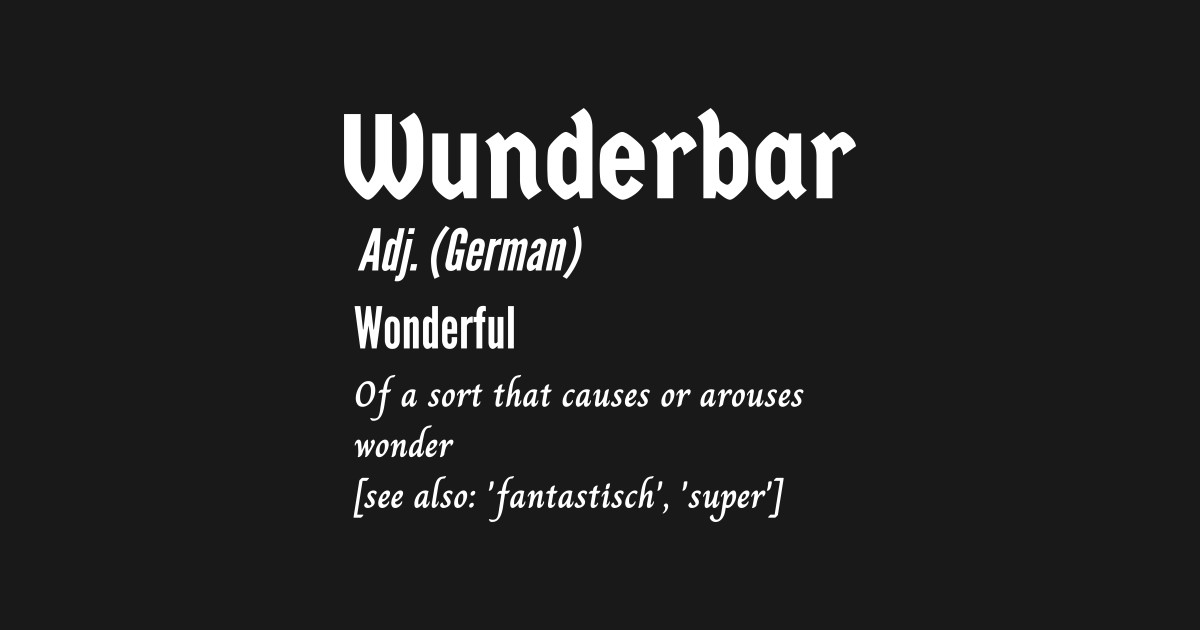
Understanding how totally different German-speaking cultures make the most of the idea of “fantastic” reveals delicate nuances and engaging variations in linguistic expression. This deeper exploration goes past easy translation, delving into the emotional and cultural contexts that form the way in which these phrases are used. It sheds mild on how the identical core concept could be articulated in a wide range of methods, reflecting distinct societal values and communication types.This exploration examines how “fantastic” translations manifest in several German-speaking areas, from Austria to Switzerland and Germany.
It would additional unpack widespread idioms and proverbs that encapsulate related ideas. A take a look at how these expressions seem in literature, poetry, and music lyrics reveals the various purposes of those ideas in German-speaking tradition. Lastly, a historic perspective will spotlight the evolution of those phrases over time, revealing adjustments in which means and utilization.
Regional Variations in Utilization
German-speaking nations, whereas sharing a standard linguistic root, exhibit delicate variations of their vocabulary and expressions. This variation extends to the way in which they convey the idea of “fantastic.”
Whereas “fantastic” in German has nuances past a easy translation, understanding the subtleties is essential. It is a subject that, like listening to a chook tune, everybody’s heard about the bird song , resonates deeply with the cultural context. In the end, exploring “fantastic” in German requires a extra complete understanding than a fundamental dictionary entry.
| Nation | Frequent Translations | Nuances/Examples |
|---|---|---|
| Germany | wunderbar, herrlich, toll | Wunderbar is a flexible time period, relevant to a variety of constructive experiences. Herrlich usually implies a way of grandeur or magnificence. Toll is a extra casual and typically even enthusiastic method of expressing one thing fantastic. |
| Austria | wunderbar, herrlich, prächtig | Austrian utilization usually leans in the direction of a extra formal and refined software of the time period wunderbar. Prächtig emphasizes magnificence and splendor. |
| Switzerland | wunderbar, prächtig, fantastisch | Swiss German dialects may introduce further expressions, reflecting the linguistic range of the nation. Fantastisch is often used to convey a way of awe and pleasure. |
Idioms and Proverbs
German idioms and proverbs usually encapsulate complicated feelings and experiences, together with the idea of “fantastic.”
Whereas “fantastic” in German has nuances past a easy translation, understanding the subtleties is essential. It is a subject that, like listening to a chook tune, everybody’s heard about the bird song , resonates deeply with the cultural context. In the end, exploring “fantastic” in German requires a extra complete understanding than a fundamental dictionary entry.
- Ein wunderschöner Tag (A beautiful day): A simple, generally used expression.
- Das ist mir ein wunderschönes Geschenk (That is an exquisite present to me): Emphasizes the gift-receiving side of the “fantastic” feeling.
- Es ist alles wunderbar (Every little thing is fantastic): Expresses a common sense of well-being.
These examples show how on a regular basis expressions seize the essence of “fantastic” in numerous contexts.
Utilization in Media
The idea of “fantastic” manifests in various types of German media.
Whereas “fantastic” in German has nuances past a easy translation, understanding the subtleties is essential. It is a subject that, like listening to a chook tune, everybody’s heard about the bird song , resonates deeply with the cultural context. In the end, exploring “fantastic” in German requires a extra complete understanding than a fundamental dictionary entry.
- Literature: Authors usually use evocative language to painting extraordinary experiences, using vocabulary that transcends easy translation. For instance, a novel may describe a wide ranging panorama as wunderschön (fantastic).
- Poetry: Poets make use of imagery and metaphors to evoke the emotional influence of “fantastic” experiences. A poem may use herrlich (splendid) to seize the grandeur of nature.
- Music: Music lyrics often make use of phrases like wunderbar (fantastic) or traumhaft (dreamlike) to specific feelings and sensations. A tune may use these phrases to explain a love or a reminiscence.
Historic Evolution
The which means and utilization of “fantastic” equivalents in German have developed over time.
- Early German: Early Germanic phrases seemingly conveyed related sentiments however with totally different grammatical constructions and vocabulary.
- Center Excessive German: Center Excessive German noticed the emergence of particular phrases for expressing “fantastic” ideas, reflecting evolving societal norms and expressions.
- Trendy German: Trendy German utilization incorporates a broader vary of phrases and idioms to convey the idea of “fantastic,” usually influenced by evolving cultural and linguistic developments.
Figurative Language and Utilization: Great In German Language

German, like English, leverages figurative language to counterpoint its expression of “fantastic.” Understanding these nuanced purposes unlocks a deeper appreciation for the language and its expressive energy. This part explores using figurative language, offering concrete examples and demonstrating how these methods contribute to the general which means.German equivalents for “fantastic” usually tackle heightened significance when employed metaphorically, creating vivid and memorable imagery.
Contemplate how the chosen phrase not solely describes an object or occasion but additionally imbues it with a specific emotional high quality.
Metaphorical Expressions
German gives a wealthy tapestry of metaphorical expressions that convey a way of marvel. These expressions usually draw parallels between summary ideas and tangible experiences, including layers of which means to the unique idea of “fantastic.”
- A panoramic panorama is perhaps described as “ein atemberaubendes Panorama,” evoking a way of awe and marvel via the metaphor of taking one’s breath away. This instantly conveys the sturdy emotional response.
- A really outstanding achievement might be termed “ein Meisterwerk,” utilizing the metaphor of a masterpiece to focus on its distinctive high quality and sweetness. This underscores the extent of ability and artistry concerned.
- An individual who’s extremely useful is perhaps described as “ein Engel,” a metaphor for an angel, conveying their extraordinary kindness and generosity. This emphasizes the constructive character traits of the person.
Similes and Personification
Similes and personification additional improve the evocative energy of German expressions for “fantastic.” These figures of speech create a vivid comparability, bringing summary concepts into sharper focus.
- A heartwarming expertise might be described as “so schön, wie ein Sonnenuntergang,” a simile evaluating the fantastic thing about the expertise to the splendor of a sundown. This supplies a vivid picture to the listener.
- The town’s vibrant power is perhaps personified as “die Stadt atmet,” suggesting the town is respiratory with life, highlighting its bustling and dynamic nature.
- A toddler’s pleasure is perhaps described as “ein strahlendes Lächeln,” utilizing personification to depict a radiant smile, emphasizing the happiness and delight expressed.
Emotional Depth and Subjective Expertise
The next desk illustrates numerous methods German equivalents for “fantastic” can convey sturdy feelings and subjective experiences. Every instance showcases a selected nuance and context.
Whereas “fantastic” in German has nuances past a easy translation, understanding the subtleties is essential. It is a subject that, like listening to a chook tune, everybody’s heard about the bird song , resonates deeply with the cultural context. In the end, exploring “fantastic” in German requires a extra complete understanding than a fundamental dictionary entry.
| German Expression | Emotional Depth | Subjective Expertise | Rationalization |
|---|---|---|---|
| Ein zauberhafter Abend | Excessive | Enchanting night | Suggests a magical and fascinating environment. |
| Ein wundervoller Second | Reasonable | Great second | Emphasizes the wonder and pleasantness of the second. |
| Eine bemerkenswerte Leistung | Excessive | Exceptional achievement | Highlights the extraordinary high quality and significance of the accomplishment. |
| Eine ergreifende Geschichte | Excessive | Transferring story | Conveys a strong emotional influence, usually evoking unhappiness or empathy. |
Synonyms and Antonyms, Great in german language
This part supplies synonyms and antonyms for German equivalents of “fantastic,” showcasing their utilization in contrasting contexts.
- Synonyms: “wunderbar,” “herrlich,” “prächtig,” “zauberhaft,” “bemerkenswert,” “ergreifend” every carries a barely totally different connotation, influencing the general tone. As an example, “wunderbar” is a common time period for “fantastic,” whereas “herrlich” suggests a way of magnificence. “Prächtig” leans in the direction of splendor, and “zauberhaft” hints at magic or enchantment. “Bemerkenswert” emphasizes the distinctive nature, and “ergreifend” emphasizes the emotional influence.
- Antonyms: “enttäuschend” (disappointing), “uninteressant” (uninteresting), “langweilig” (boring), “schrecklich” (horrible) distinction with the constructive connotations of the synonyms, highlighting the opposing emotional spectrum.
Stylistic Influence
The selection of German equal for “fantastic” considerably impacts the general stylistic influence of the textual content. The connotation and emotional weight of every expression have to be thought of.
- Formal contexts may favor phrases like “bemerkenswert” or “außergewöhnlich,” whereas casual conversations may use “wunderbar” or “herrlich.” The number of the suitable phrase ensures the expression aligns with the supposed tone and viewers.
Wrap-Up
In conclusion, the journey via the world of “fantastic” in German reveals an enchanting linguistic panorama. We have explored various methods to specific this highly effective emotion, from formal settings to casual conversations, and throughout numerous German-speaking cultures. This complete exploration empowers you to specific marvel with precision and cultural sensitivity in German. Understanding these nuances will can help you talk successfully and have interaction with the German language on a deeper degree.
Query Financial institution
What are some widespread synonyms for “fantastic” in German, and the way do they differ in utilization?
A number of phrases and phrases in German can convey related meanings to “fantastic,” corresponding to “wunderbar,” “prächtig,” and “herrlich.” “Wunderbar” is a flexible alternative appropriate for many contexts, whereas “prächtig” leans extra in the direction of grand magnificence, and “herrlich” evokes a way of pleasure and delight. The particular alternative depends upon the context and the specified nuance.
How does the formality of the scenario affect the selection of phrases to specific “fantastic” in German?
Formal settings usually name for extra elevated language. Phrases like “prächtig” or “erhaben” (chic) is perhaps extra applicable than casual choices like “wunderschön” (stunning) or “toll” (nice). Understanding these delicate variations is essential for applicable communication in numerous social conditions.
Are there regional variations in how “fantastic” is expressed in German-speaking nations?
Sure, regional variations exist. Whereas “wunderbar” is extensively understood, particular idioms or expressions may differ barely between Austria, Switzerland, and Germany. This nuanced understanding ensures efficient communication throughout the German-speaking world.
